Cellulitis may sound like a complicated medical term, but it simply refers to a bacterial infection in the deeper layers of the skin. It can occur almost anywhere on the body, although it is especially common on the lower legs.
It is important to recognize cellulitis because it isn’t something you want to ignore. With proper treatment, it often clears up with antibiotics. Without treatment, however, the infection can spread deeper into the body and become serious.
What Causes Cellulitis?

Our skin normally provides a protective barrier against bacteria. Cellulitis can develop when bacteria find a way through that barrier.
The opening doesn’t necessarily have to be a large wound. A cut, scrape, burn, puncture wound or surgical incision can provide an entry point. Even very dry or cracked skin can sometimes allow bacteria to enter.
Skin conditions such as eczema, athlete’s foot and shingles can also create breaks in the skin.
The bacteria most often associated with cellulitis are streptococcus and staphylococcus, including some harder-to-treat strains such as MRSA.
Cellulitis generally is not spread from person to person.
What Does Cellulitis Look and Feel Like?
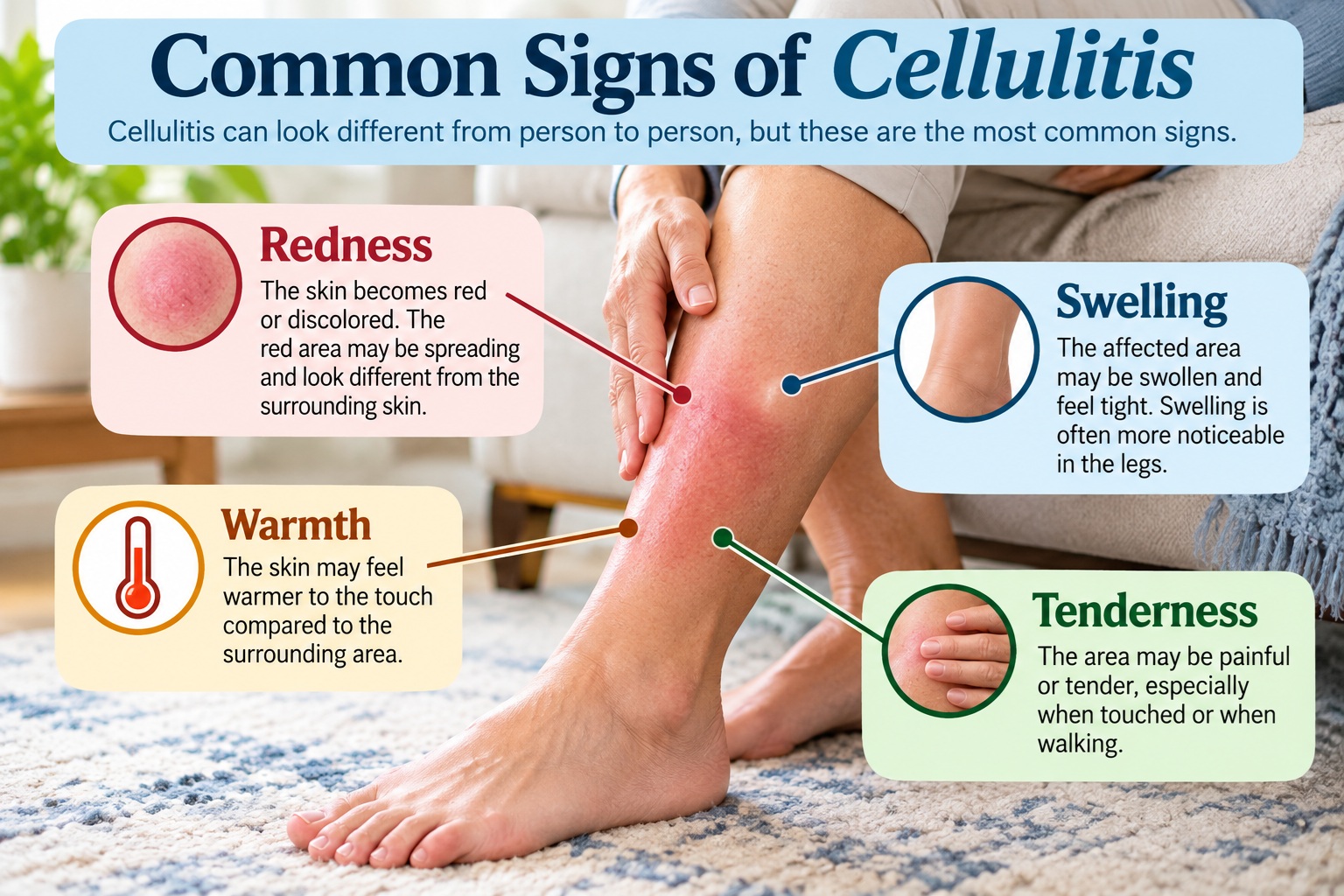
Cellulitis commonly affects only one side of the body. The infected area may become:
- Red or discolored
- Swollen
- Warm to the touch
- Painful or tender
- Dimpled or pitted
Some people may also develop spots or blisters on the skin. As the infection progresses, fever and chills can occur.
Because other conditions can cause redness and swelling, it is important not to try to diagnose cellulitis yourself.
Who Is More Likely to Develop It?
Anyone can develop cellulitis, but certain conditions increase the risk.
A previous case of cellulitis makes another episode more likely. Diabetes, a weakened immune system, being overweight and chronic swelling of an arm or leg can also increase the risk.
That chronic swelling is called lymphedema, which means fluid builds up in the body’s tissues because the lymphatic system isn’t draining it properly.
People with poor circulation also need to be especially careful about protecting their skin and watching for wounds that aren’t healing properly.
Why Does Cellulitis Need Prompt Treatment?
This is the part I don’t want to sugarcoat. Cellulitis can become dangerous if it isn’t treated.
The infection can spread beyond the skin and into the bloodstream, bones or other tissues. Some of the medical terms you may hear include:
- Bacteremia — bacteria have entered the bloodstream.
- Osteomyelitis — an infection of the bone and bone marrow.
- Endocarditis — an infection and inflammation involving the inner lining of the heart and its valves.
- Sepsis — an extreme response by the body to an infection that can damage tissues and organs and become life-threatening.
Another rare but extremely serious complication is necrotizing fasciitis, sometimes called “flesh-eating disease.” This is an infection that spreads into deep tissue and requires emergency treatment.
These complications aren’t meant to frighten you. They help explain why getting medical attention early matters.
When Should You See a Doctor?
If you develop a swollen rash or an area of redness that is getting larger, contact a healthcare professional promptly.
A rapidly changing or spreading rash accompanied by fever requires urgent medical attention.
Cellulitis is usually treated with antibiotics. More serious infections may require hospitalization so antibiotics can be given directly into a vein.
The important thing is not to wait and hope a worsening infection will simply disappear.
Can Cellulitis Be Prevented?
You can’t prevent every case, but good skin care can reduce opportunities for bacteria to get inside.
If you get a cut or scrape, gently wash it with soap and water and keep it protected while it heals. Watch for increasing redness, pain, swelling, drainage or pus.
Keeping your skin moisturized can also help prevent cracking and peeling. However, moisturizer shouldn’t be put directly onto an open sore unless your healthcare professional recommends it.
Protect your hands and feet when you’re doing activities that might cause cuts or scrapes, and be careful when trimming your fingernails and toenails.
Athlete’s foot and fungal toenail infections should also be treated because damaged or cracked skin around the feet can provide an opening for bacteria.
People with diabetes or poor circulation should be especially careful about their feet. A daily check for cuts, blisters or other injuries can help catch problems early.
What If Cellulitis Keeps Coming Back?
Unfortunately, having cellulitis once can increase the chance of developing it again.
Repeated infections can also affect the lymphatic system and contribute to ongoing swelling, which can make future infections more likely.
For people who have recurring cellulitis, healthcare professionals may recommend additional preventive measures. In some cases, long-term antibiotics may be prescribed to reduce the chance of another infection.
Good skin care remains important: keep the skin clean and moisturized, protect yourself from cuts and scrapes, and treat minor wounds and skin infections promptly.
The Bottom Line
Cellulitis is more than irritated or inflamed skin. It is a bacterial infection that needs medical attention, particularly when redness, warmth, pain or swelling is spreading.
The encouraging news is that cellulitis can usually be treated successfully when it is recognized early.
And perhaps the simplest lesson from all of this is one we sometimes forget: our skin is our first line of defense. Taking care of small cuts, cracked skin and seemingly minor infections can help prevent a much bigger problem later.
Enjoy practical health and wellness information like this?
Join Living the Good Life for helpful articles, everyday tips, and resources delivered to your inbox.
Stay Connected with Living the Good Life
Get helpful articles, everyday tips, and useful resources delivered to your inbox.