What Is Melatonin?
Does it surprise you that melatonin is a hormone and not a sleeping pill? Of course, it can be reproduced and sold over the counter as a sleep aid, but as a naturally occurring hormone, melatonin is so much more.
Melatonin also acts as an antioxidant and free-radical scavenger. Researchers continue to study its possible role in inflammation and a variety of health conditions.

Yes, melatonin is closely connected to sleep and may help with insomnia and certain sleep disorders. It plays an important role in your circadian rhythm—your body’s 24-hour internal clock. That clock runs in the background, helping your body when it is time to sleep, wake up, and even eat.
Sometimes our circadian rhythm gets disrupted. Maybe you work a night shift and need to sleep during the day and stay alert at night. If you travel, you may have experienced jet lag. Have you ever had a situation that turned your normal sleep schedule upside down?
What Interferes with Natural Melatonin Production?
One function of the pineal gland is to produce melatonin. Light and darkness help regulate its release. When your eyes detect light, melatonin production decreases. As darkness arrives, melatonin levels begin to rise, helping signal to your body that it is time to prepare for sleep.
Other things that can interfere with your body’s normal sleep-wake cycle include:

- Blue light from computers, phones, TVs, and LEDs
- Bright room lights
- Working at night
- Aging
- Alcohol, especially in the evening
- Stress
- Certain medications
Melatonin Supplements
Our bodies produce melatonin naturally, and the amount fluctuates throughout the day and night. Melatonin levels normally rise in the evening as your body prepares for sleep. Melatonin doesn’t simply make you sleep. Think of it more as a signal telling your body that nighttime has arrived.
There are also melatonin supplements that people sometimes use when their normal sleep schedule has been disrupted. Jet lag is a good example. Maybe you’re traveling for pleasure or business and don’t want to spend the next day exhausted. Or perhaps an occasional change in your schedule has made it difficult to fall asleep.
An occasional sleepless night is one thing. If you find yourself regularly depending on melatonin supplements or having trouble sleeping several nights each week, talk with your doctor. Persistent sleep problems deserve more than a quick fix.
How Does Melatonin Actually Help You Sleep?
We know the pineal gland produces melatonin, and we know melatonin is a hormone naturally produced by the body. Under normal circumstances, your melatonin level rises as darkness approaches.
That increase doesn’t knock you out. Instead, it signals that it is time to slow down and get ready for sleep.
As we get older, natural melatonin production may decrease. Our sleep-wake cycle can also become disrupted by our lifestyles. You might work at night, travel across time zones, or simply have habits that don’t cooperate with your body’s natural clock.
One or two occasional nights of poor sleep don’t necessarily mean you need to start taking melatonin regularly. If sleeplessness is happening several nights each week, that’s a good reason to talk with your doctor or a sleep specialist.
Taking too much melatonin can also cause side effects, including:
- Daytime sleepiness
- Dizziness
- Stomach discomfort
How Can Melatonin Help You Get Better Sleep?
Melatonin is sometimes called the “sleep hormone,” but you can help your natural melatonin do its job by paying attention to your bedtime routine.
About two hours before bedtime, your melatonin levels normally begin to rise. You can support that natural process by:
- Lowering the lights
- Reducing computer and smartphone use
- Limiting bright screens close to bedtime
- Making your bedroom comfortable and uncluttered
If you’ve tried improving your bedtime habits and still think you need a supplement, this is where using melatonin wisely becomes important. If you’d like some help improving your sleep routine first, my 7-Night Sleep Reset walks you through simple steps for creating better sleep habits.
I recently asked a doctor a question that I thought would have a simple yes-or-no answer:
Can you overdose on melatonin?
It turned out the answer wasn’t nearly as simple as I expected. The more important issue is using melatonin safely.
With melatonin supplements, more is not necessarily better. The amount and timing that are appropriate can vary from person to person, so follow the product directions and discuss regular use with your doctor.
Possible side effects can include:
- Headache
- Dizziness
- Nausea
- Morning sleepiness
- Drug interactions
Another consideration is that dietary supplements are not regulated in exactly the same way as prescription medications, so the amount of melatonin in a product may not always match what you expect from the label.
Melatonin supplements are available in several forms, including:

- Tablets or capsules
- Gummies
- Liquids
- Extended-release products
And there is one more form of melatonin that caught my attention.
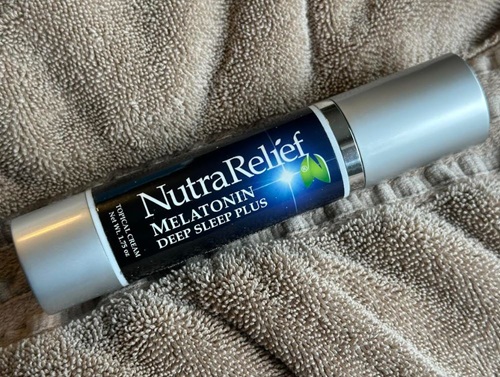
Melatonin cream.
The product I am currently learning about comes in a pump-style tube and is applied to the skin. And that brings me to the reason I started researching melatonin in the first place.
Melatonin in a Liposomal Cream
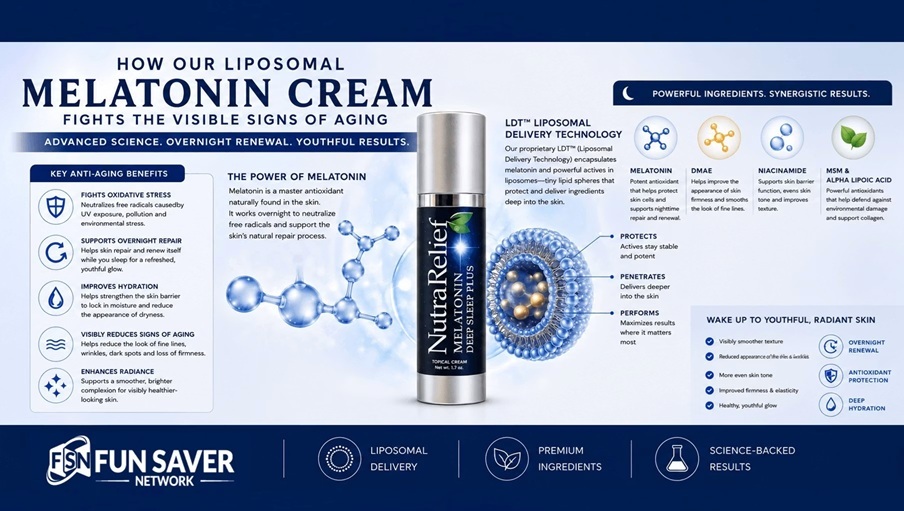
My interest in liposomal melatonin started when I learned that melatonin was available as a topical cream rather than only in the oral supplements I was familiar with. Instead of swallowing a tablet, capsule, gummy, or liquid, the cream is applied directly to the skin.
Liposomal products use tiny lipid-based carriers designed to help deliver an ingredient through the skin. Melatonin itself has been studied for transdermal use, which is what made this form especially interesting to me.
The product I am learning about provides specific directions for where and how much to apply. Because formulations can differ, I would follow the directions provided with the particular product rather than assuming that all melatonin creams are used the same way.
- Wrists
- Inner arms
- Upper or lower chest
- Inner thigh
- Calves
- Abdomen
- Bottom of feet
Specifically for the product I am using, put it on your face. One of the benefits of this Melatonin cream is; it is also a moisturizing cream.
Is Melatonin Right for You?
Melatonin is a hormone that you body makes. You can help it along, if you have a problem sleeping on a regular basis. I would suggest that you revisit your bedtime habits as a first step. Is your bedroom conducive to a good night’s sleep? Have you allowed enough time for the natural melatonin to kick in? Did you have to eat that last snack before you laid down? These are the things that you can control and optimize your natural sleep.
If you have persistent sleep problems, you should discuss them with your doctor.
Interested in learning more about liposomal melatonin cream?
I found this option through Nutra Relief and Fun Savers Network. You can read more about the product, its ingredients, and how it is used before deciding whether it is right for you.